
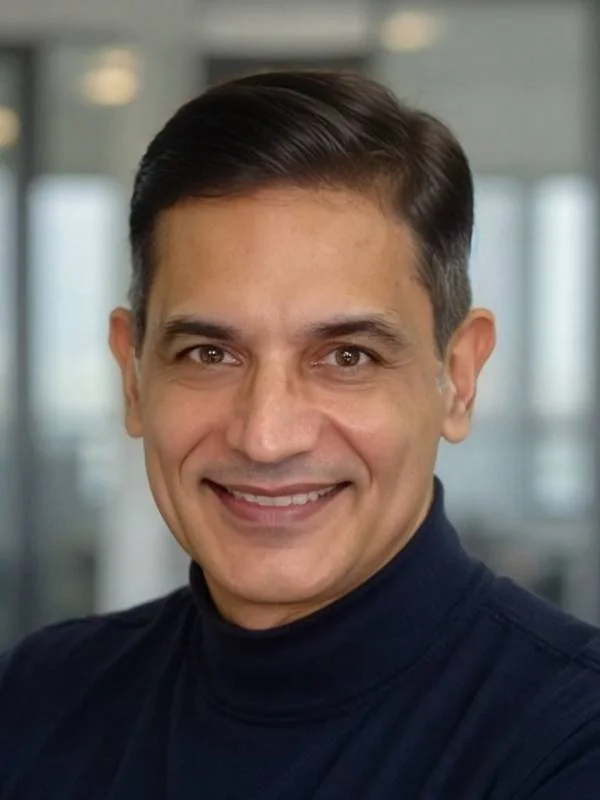
Thirty years of watching people, then asking why
Three chapters, in the order they happened. Each one changed what the next one was for.
- 01Practice
The client in front of you
His medicine began before medical school, on the mud floor of a village home, watching his grandfather and father practise a living, unwritten Ayurveda at the bedside. Villagers arrived carrying pain no one else would treat, and were met with attention rather than protocol. The MBBS, the MD in Medicine and a cardiology-focused residency gave that instinct its discipline, and three decades of preventive, functional and regenerative practice have not changed its starting point: the client in front of you, and what their physiology is actually doing.
- 02Research and service
Testing what practice suggested
Instead of private practice he joined the Defence Research and Development Organisation, where he helped develop a coronary risk analyser and one of India’s early telemedicine links, and ran the DRDO Health Centre: more than eighteen thousand employees and their families screened, quiet problems caught before they became loud ones. He later built and headed a CBRN defence, mitigation and research division, and led medical teams through the Srinagar floods and the Tamil Nadu tsunami. The publications and patents came from the same habit throughout: when clinical observation disagreed with the textbook, he treated the disagreement as data.
- 03Why he teaches
What keeps the work honest
Two things anchor everything since. In 2005 he founded the Bhagwati Society for Child and Women Welfare, which has helped more than fifteen hundred people who could not otherwise afford diagnosis and treatment; that promise is carried into SOMA, where care is deeply subsidised for those who cannot afford it. And in 2012 he lost his mother to Alzheimer’s, a loss that turned his research toward neurodegeneration, environmental toxins, and the under-examined places where answers might still be found. The Academy exists to hand on what those years taught: old wisdom and new rigour do not have to be enemies, and the reasoning can be learned.