

Start here

Five ideas, read in order, and you will understand how we think.

Everything taught at SOMA Academy rests on these five ideas. Each takes a few minutes to read. Each ends where it naturally leads: an article, a topic, and eventually a course.

About 10 minutes in totalNo sign-in neededFree
01
crystals dissolving into warm fluid, macro
Metabolic health · Idea one of five · 2 min

Compensation comes before disease

One of the most useful habits in medicine is to stop asking only whether a laboratory value is normal, and to start asking what the body is doing to keep it normal.

Continue readingShow less

Physiology is adaptive. When demand changes, the regulatory systems answer: heart rate, insulin secretion, cortisol, vascular tone, the kidney's handling of sodium, even the sensitivity of hormone receptors. None of this is automatically pathological. It is how the body maintains function under changing conditions.

Two ideas from physiology are worth holding onto. Homeostasis describes regulated stability. Allostasis describes the adjustments that keep that stability when circumstances change. When the demand is repeated or prolonged, holding an apparently normal output can take progressively more effort, and that accumulated burden is what researchers call allostatic load.

Insulin resistance is the familiar example. Glucose can stay within the reference range for years because the pancreas has quietly raised its insulin output to keep it there. A fasting glucose read on its own therefore says less than glucose read beside insulin, body composition, triglycerides, blood pressure, activity and sleep.

A caution belongs here. Compensation must not become the explanation for every symptom and every result. Some disorders arrive abruptly. Some compensatory changes are ordinary adaptation. Not every physiological variation deserves to be called an early diagnosis.

The practical lesson is short: a reference range tells you where a measurement sits. It does not tell you how hard the body is working to keep it there. Good clinical reasoning asks about both.

Which raises the next question: what gives a cell the capacity to maintain, adapt and repair at all? Energy.

Next: A cell that cannot make energy cannot heal ↓

02
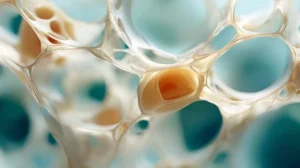
cell membranes, macro
Cellular health · Idea two of five · 2 min

A cell that cannot make energy cannot heal

I use this sentence as a physiological principle, not as a claim that every chronic condition begins in the mitochondria.

Continue readingShow less

Repair is work. Protein synthesis costs energy. So do membrane repair, ion gradients, cell migration, proliferation, signalling, and the clearing away of damaged components. ATP is not an optional extra added to healing; it is part of the machinery that makes repair possible.

Mitochondria sit at the centre of this because oxidative phosphorylation supplies most cellular ATP. They also take part in redox signalling, calcium handling, cell death pathways and metabolic signalling, and during tissue injury, mitochondrial activity and reactive oxygen species help coordinate the cellular response to damage.

The important word is capacity. A living cell rarely has simply "enough" energy or "none". Bioenergetics is dynamic: demand rises and falls, substrates change, oxygen availability changes, mitochondria alter their activity and their structure, and glycolysis can carry a substantial share in some cells and circumstances.

That is why I would not diagnose mitochondrial dysfunction from fatigue alone, and why I would not assume a mitochondrial supplement has addressed the cause of a symptom. The disciplined question is: is cellular energy metabolism actually impaired, what evidence shows it, and does it matter for the tissue and problem in front of us?

There is a connection to physiological stress worth knowing. Maintaining adaptation itself consumes energy, and one model of allostatic load proposes that prolonged demand competes with the resources needed for maintenance and repair. A useful framework, though still a model rather than a full account of chronic disease.

For me, cellular medicine begins with respect for this constraint: biology cannot repair what it cannot power.

The next regulatory network shapes energy, metabolism and adaptation all at once: the endocrine system.

Next: Hormones behave as a system ↓
03
a signal droplet meeting a membrane, macro
Hormones · Idea three of five · 2 min

Hormones behave as a system

I rarely find it useful to think of a hormone as an isolated number.

Continue readingShow less

Endocrine physiology is built on communication and feedback. The hypothalamus, pituitary, thyroid, adrenals and gonads work through regulated axes. Insulin and glucagon answer metabolic conditions. Hormones influence other hormones, and several can act on the same function at once.

Blood glucose shows this well. Insulin matters, but glucagon, cortisol, growth hormone and the catecholamines are all in the room. Thyroid physiology runs through hypothalamic and pituitary signalling, secretion, peripheral conversion, transport and feedback. Cortisol belongs to its own loop between hypothalamus, pituitary and adrenal cortex.

All of this changes how a laboratory report should be read. A concentration only means something in context. Time of sampling matters for some hormones. Binding proteins matter. Menstrual phase can matter, medication matters, and illness itself can shift endocrine physiology. Receptor sensitivity and tissue metabolism can alter the biological effect even when the circulating level is easy to measure.

None of this licenses vague talk of "hormonal imbalance". Stretched wide enough, that phrase stops meaning anything. Endocrinology has diagnostic criteria, feedback tests, reference intervals and recognised disorders, and we should use them.

Reductionism has its own limits, though. Correcting one number without understanding the feedback loop around it invites the wrong conclusion. The aim is not to push every hormone to some preferred figure. It is to ask whether regulation is appropriate for this person, in this context.

Thinking in systems also keeps something else in view: endocrine physiology touches metabolism, sleep, stress signalling, reproduction, body composition and immunity. Those interactions are real. Their clinical significance still has to be demonstrated, not assumed.

Among the signals tissues use to report stress, injury and defence, one deserves its own chapter: inflammation.

Next: Inflammation is information ↓
04
a living ecosystem of soft forms and spheres, macro
Gut and immunity · Idea four of five · 2 min

Inflammation is information

Inflammation is often discussed as if it were a toxin to be removed. That is not how I teach it.

Continue readingShow less

Inflammation is a coordinated response to signals such as infection, tissue injury and cellular damage. In the right setting it recruits immune cells, changes vascular behaviour, shifts signalling molecules and organises defence and repair. Acute inflammation is not inherently harmful.

Just as important, resolution is an active programme of its own. An inflammatory response does not end simply because its mediators fade. Cells and signalling molecules clear inflammatory material, limit further recruitment and restore tissue homeostasis, and when that process fails, inflammation can persist.

This is why I call inflammation information.

An elevated hsCRP tells me an inflammatory signal may be present. It does not tell me why. The source could be infectious, metabolic, autoimmune, traumatic or something else entirely. The biomarker is a clue, not a diagnosis.

The same caution applies to anti-inflammatory lifestyles and supplements. Moving an inflammatory marker is not the same as improving a clinical condition; biomarkers and outcomes are not interchangeable.

And sometimes inflammation genuinely is the target. Established anti-inflammatory and immunomodulatory treatments have major roles in properly diagnosed conditions. The point is not that inflammation should never be suppressed. The point is to understand what process we are treating before we treat it.

So I ask three questions whenever I meet inflammation: what started it, what is maintaining it, and is normal resolution happening? Those three take you further than calling inflammation good or bad ever will.

Behind all of these systems sits a longer question: how do accumulated changes alter the rate at which a person ages?

Next: Ageing has a rate, and rates can be measured ↓
05
a luminous strand dissolving into particles, macro
Longevity · Idea five of five · 2 min

Ageing has a rate, and rates can be measured

Chronological age tells you how much time has passed. It says little about what has happened biologically along the way.

Continue readingShow less

Two people of the same age can differ substantially in physical function, metabolic health, cardiovascular risk, cognition, body composition and physiological reserve. That gap is why researchers now study ageing not only as accumulated years but as a trajectory of biological change.

The approaches vary. Functional measures include grip strength, gait speed, balance, frailty and cognitive performance. Physiological and biochemical candidates include inflammatory markers and measures of organ function. At the molecular end sit the DNA methylation clocks. An international expert consensus has identified candidates from several of these domains for ageing research and intervention studies.

Some tools go further and estimate a pace of ageing. DunedinPACE, for example, was built from longitudinal change across multiple measures of organ-system integrity, then translated into a DNA methylation measure, and it associates with morbidity, disability, mortality and other ageing-related outcomes in research populations.

That is scientifically interesting. It is not the same as owning a biological speedometer for an individual client.

Today's epigenetic clocks have real limitations for individual decisions. Different clocks measure different constructs. Sampling and processing affect results. DNA methylation is tissue dependent and biologically dynamic. Above all, the number a clock produces does not tell you which intervention a person needs, and recent analyses have specifically cautioned against treating these tools as established personal diagnostics.

So when I say ageing has a rate, I mean something more careful than the commercial promise of a single "true biological age". Change in function and physiology can be measured over time, and research tools can estimate aspects of biological ageing. The science weakens the moment those estimates are dressed in more precision or authority than the evidence carries.

From here, the Academy's work begins: studying the measurable processes that may influence healthy longevity, while keeping established medicine and promising research clearly apart.

Next: test how you think about the five ↓
Knowledge check

Five ideas, five questions

Test how you think about each idea, save your progress, and see where you disagree. Free, about five minutes.

Take the knowledge check
Where the route ends

When reading stops being enough

The five ideas end at insulin resistance, because that is where most clinicians first see the gap between what the chart says and what the client shows. Diabetes Rewired is where that gap becomes a protocol.

Not ready for a course? Join The Thread and keep reading. The route stays open.

Macro photograph of warm golden light drawn into a cool teal currentCertified programmeDiabetes RewiredRead insulin dynamics years before glucose changes, and build a management protocol you can defend.CertificateView the programme →
Scroll to Top